‘We come from the City’ (Από την Πόλη έρχομαι): Café Aman Istanbul
Stelyos is from Istanbul. After many years as a member of the Ecumenical Patriarchate choir, he moved to the island of Gökçeada (Imroz) in 2020, “to start life here again, to hear our mother tongue [Greek] again, to revive the songs, the folk songs, festivals…” He teaches music in a Greek high School and trains the Greek children of the island to sing traditional Orthodox church music.

Together with his wife, Pelin Suer, Stelyos established the Café Aman Istanbul music band in 2009. Café Aman sings the music of Istanbul in Greek and Turkish. The band is reviving the Rebetiko repertoires (Rebetiko is a style of Greek urban folk music that combines traditional Greek folk music, Byzantine chant, and the urban musical styles of the Ottoman Empire) from Anatolia and Greece and the tradition of the café-aman taverns, where traditional songs were performed from the 19th-century Ottoman times. He explains the concept of ‘Istanbul Music’:
Istanbul music is not just Rebetiko. We have no such fixation. There are Ladino songs in it, and there are also songs in Armenian. There are also Kurdish songs, although few. In other words, after melting all this wealth in a shared pot, something called ‘Istanbul music’ emerged.
The group is popular in Greece and Turkey. Stelyos talked about a very successful concert they gave at the Megaron, a large concert hall in the centre of Athens, in November 2019. Café Aman Istanbul was invited to the Megaron and had to perform two nights in a row at the Hall because of the level of interest. Tickets sold out quickly. Stelyos said that at the time they were working on ‘Istanbul city music and heritage’ and decided to take this to Athens: We come from the City [Istanbul] (Από την Πόλη έρχομαι).
The Café Aman Istanbul knew that some Greeks from Turkey in Athens were fans of theirs, but the huge interest in Athens was a surprise. He explained why that was:
I felt this there [in Athens]; I tell you this because I also lived there: inside every Greek, there is love for and a sense of belonging to Anatolia, to Istanbul. This is a feeling that comes from history. This doesn’t mean that the Greeks will cross the borders and will seize these lands, I don’t mean this [laughs]. But this is an indication of their spiritual bond with Turkey, even if they have never visited. Music is already the most important bridge that unites these communities. Maybe it is a tool that makes us forget everything, but makes us equal in the moment. No doubt, this is a great power. That night we all became İstanbullu [from Istanbul].
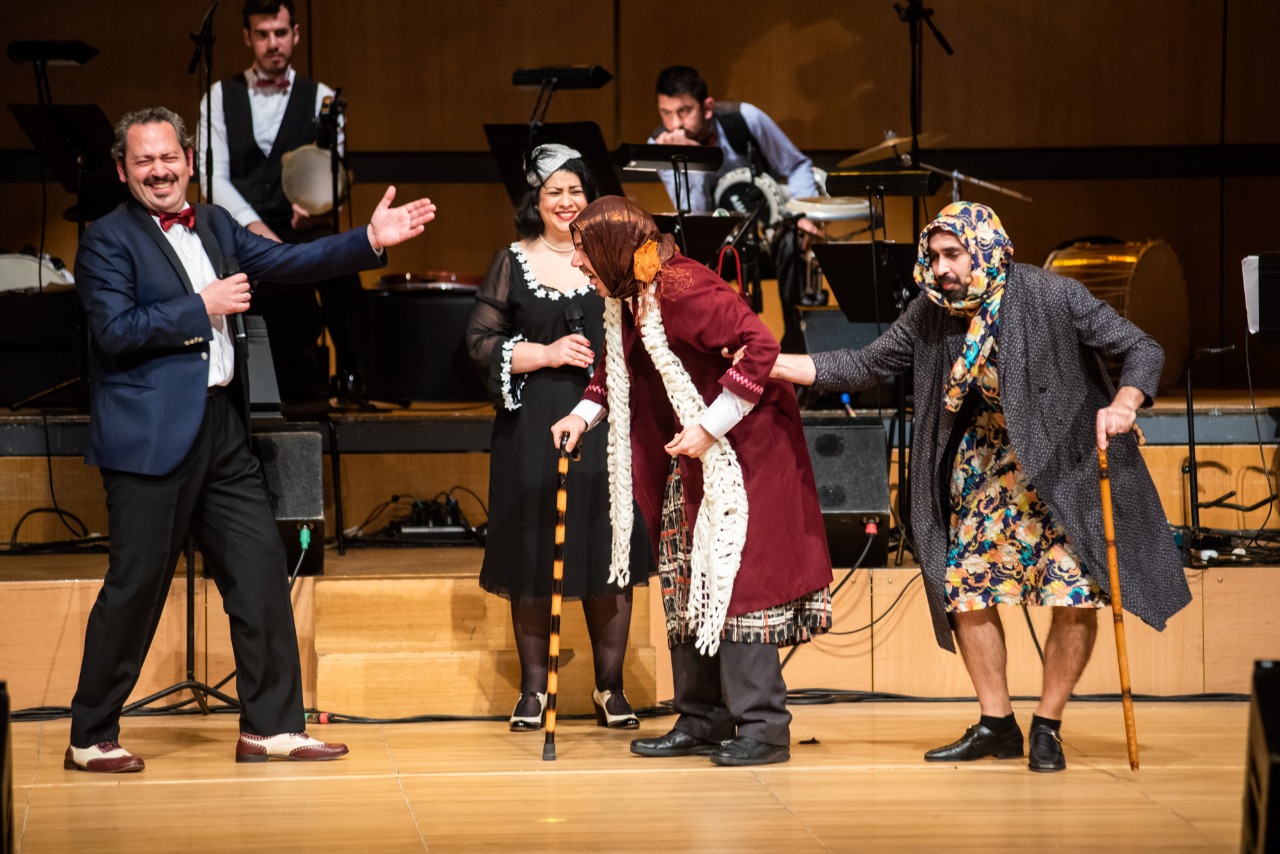
Café Aman Istanbul also recreated the traditional carnival of Tatavla, in which the Greeks of Istanbul wore comic masks and costumes to celebrate their neighbours, as shown in the photograph. The carnival would take place three weeks before the Great Lent and was also called Baklahorani (literally, ‘eating beans’) because, according to the Orthodox tradition, they would not consume meat until Easter. Baklahorani would begin with a parade from Pera to the Saint Demetrius Church in Tatavla (today’s Kurtuluş district). It would end with a festive street party there. The festival was stopped in 1941. For one year, in 2010, the carnival was revived by a group of Greeks and Turks.

Here you can listen to a song by Café Aman Istanbul: Gülbahar
I thank Stelyos for his time and for giving me permission to use these photographs and songs.